How to Manage Cash Flow Volatility When Transitioning Between Freelance Contracts

Marcus Thorne
Senior Loan Analyst · Updated October 2026

Marcus Thorne
Senior Loan Analyst · Updated October 2026
Imagine it is March 2026. You have just successfully completed a high-stakes, six-month consulting contract, and while the payout was significant, your calendar for April and May is looking unexpectedly empty. This scenario—the sudden shift from 'feast' to 'famine'—is the defining characteristic of life as an independent contractor. For many freelancers, income isn't a steady stream but rather a series of unpredictable surges and droughts. In 2026, with shifting economic landscapes, understanding how to navigate these gaps is not just a skill; it is a survival mechanism for your small business.
The reality of this volatility can be jarring. According to recent labor trends, freelance income can fluctuate by as much as 35% to 40% month-to-month depending on the industry. This instability often leads to 'financial vertigo,' where you feel in control when a big check arrives but entirely lost when that money runs out. During these transitions, many professionals look for ways to bridge the gap. For instance, some might consider personal loans to smooth out their lifestyle expenses. While such options exist, it is essential to understand that interest rates for unsecured debt can vary widely, often ranging from 7% to 36% APR, depending on your credit profile and the lender's specific terms.
This article is designed to move you away from reactive panic and toward proactive management. We will explore how to audit your actual monthly burn rate, build a tiered reserve system that accounts for tax obligations, and compare different strategies for maintaining liquidity. Our goal is to empower you with the tools needed to treat your freelance career like a stable enterprise, ensuring that a gap between contracts is merely a scheduled pause rather than a financial crisis.
The most dangerous period for a freelancer is the 'transition window'—the weeks between the end of one contract and the first payment from the next. This gap is often exacerbated by net-30 or net-60 payment terms, meaning even if you have finished your work in March, the cash might not hit your bank account until late April. To manage this, you must decouple your 'work activity' from your 'cash arrival.'
One effective strategy is to implement a 'buffer period' in your mental accounting. Instead of spending your final month's earnings as they arrive, treat them as the foundation for next month's expenses. This creates a natural delay that absorbs minor delays in client payments. If you find yourself consistently facing gaps, it may be helpful to look into how lenders view self-employment income. While traditional banks can sometimes be rigid about variable income, modern financial tools are becoming more accustomed to the 'lumpy' nature of contract work.
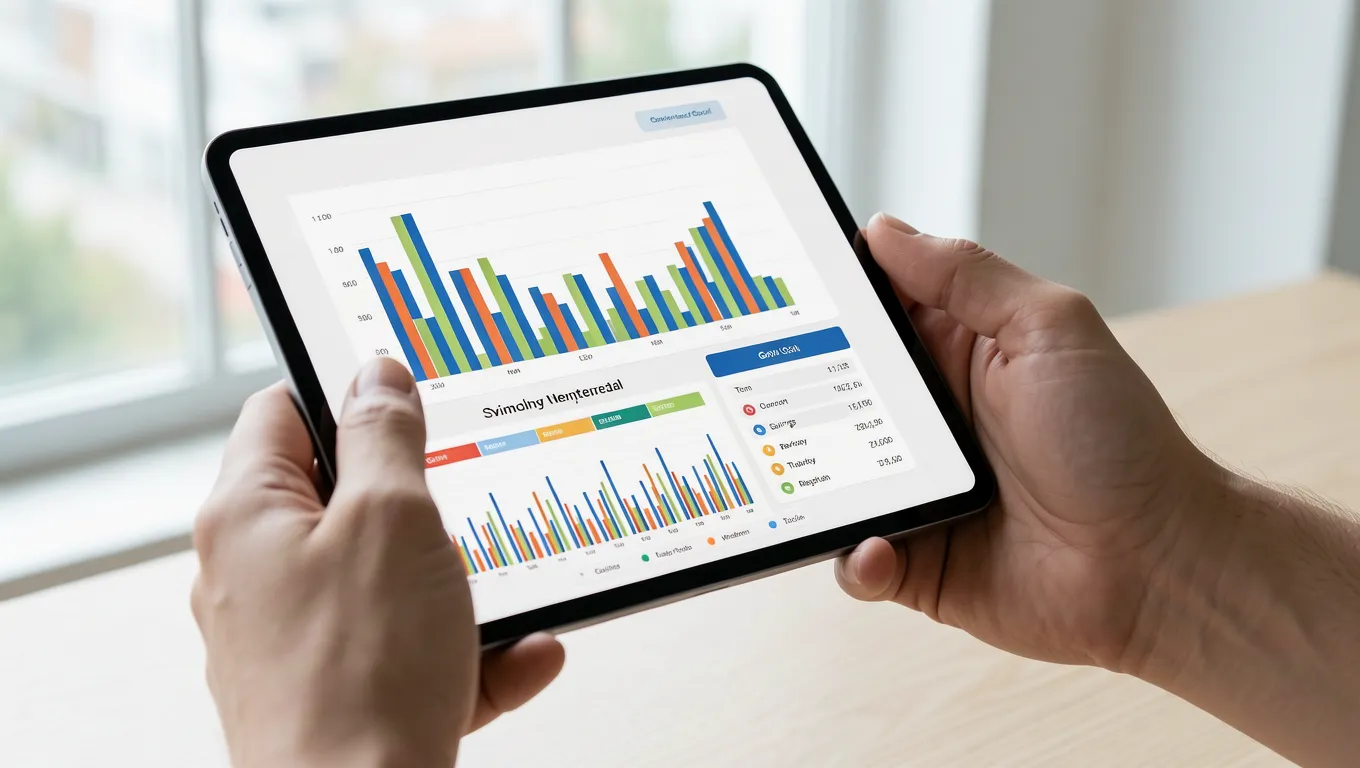
A single emergency fund is often insufficient for the freelancer who faces both personal emergencies and professional lulls. Instead, we recommend an architecture of three distinct buckets. This method ensures that you do not accidentally spend your tax money on rent or your retirement money on a slow month.
The first bucket is your Operating Fund. This should cover your basic monthly survival costs (housing, food, utilities) for at least one to two months. The second bucket is the Tax Reserve. Because you are responsible for your own self-employment taxes, this money does not belong to you; it belongs to the government. A common mistake is seeing a $10,000 check and thinking you have $10,000 in wealth, when in reality, nearly 30% of that might be earmarked for the IRS.
The third bucket is your True Emergency Fund. This is specifically for non-business emergencies—medical bills or car repairs. By separating these funds, you can look at your 'Operating Fund' and know exactly how much runway you have left before you need to seek bridge financing or new contracts. If you are looking for ways to manage these transitions, resources like Netfondcredit may help you explore different options, but the foundation must always be your internal cash management system.
When a gap becomes too large to cover with existing savings, freelancers often face a strategic choice: use your liquid savings or take on debt to smooth out the cycle. Both have distinct trade-offs that depend heavily on the current interest rate environment of 2026.
Option A is using high-yield savings accounts (HYSA). The advantage here is simplicity and zero cost; you are using your own money, so there is no interest to pay back. However, the downside is the opportunity cost. If you deplete your $15,000 emergency fund to cover a three-month gap, you have effectively stripped yourself of your safety net for future emergencies.
Option B involves utilizing a personal loan as 'bridge financing.' The primary benefit is that it preserves your cash reserves for true emergencies while providing the liquidity needed for daily life. However, the cost is the interest rate. For example, if you were to take out a $5,000 loan at 12% APR over 24 months, you would pay roughly $321 per month. You must ensure that your next contract's income can comfortably accommodate this new monthly obligation without causing further stress.
The decision framework should be simple: If the gap is expected to be short (under 30 days) and your emergency fund is low, use savings. If the gap is long-term or you need to protect your core reserves for a known upcoming expense, structured debt may be a more calculated move.
To manage volatility, you must know your 'Burn Rate'—the exact amount of money that leaves your accounts every month to keep your life running. Most freelancers overestimate their expenses during good months and underestimate them during bad ones.
Let's look at a concrete example. Suppose you are a freelance developer with the following monthly obligations:
Tax season can be a devastating shock to a freelancer who has just transitioned into a dry spell. Because the US tax system relies heavily on estimated quarterly payments, your obligations are tied to your annual projected income, not your current cash flow.
Consider this nuance: If you had an incredibly profitable Q1 in 2026, but your Q3 and Q4 are looking empty due to contract transitions, you may still owe significant estimated tax payments based on that Q1 success. Many freelancers make the mistake of spending their 'tax money' during a high-earning month, thinking they can just pay it back when the next big project arrives. However, if that next project is delayed, you are left with no cash and a looming debt to the IRS.
To avoid this, many experts recommend using a percentage-based approach. Every time a client pays an invoice, immediately move 25-30% into your Tax Reserve bucket. This ensures that by the time tax season arrives, the money is already 'gone' from your perspective, preventing you from ever feeling like it was part of your spending power.
The most dangerous path for a freelancer during a transition is the 'Credit Card Spiral.' When cash flow stops, it is tempting to use high-interest credit cards to cover basic necessities like groceries or rent. This is often a mistake because credit card APRs are significantly higher than almost any other form of debt.
Never use revolving credit with interest rates above 20% to fund long-term lifestyle costs during a contract gap. Instead, if you must borrow, look for structured options like personal loans that offer fixed terms and lower interest rates. This allows you to know exactly when the debt will be gone.
Another pitfall is neglecting your credit score while in a transition phase. You might feel that since you have no income this month, it doesn't matter if you miss a small utility payment or a subscription. However, as Experian and other credit bureaus note, even minor late payments can damage the very credit profile you need to access affordable financing when a real emergency strikes. Maintaining your score is essential for keeping your options open in 2026.